
 Insights from Inline Policy listing page
The European Commission will launch several ambitious policy and legislative initiatives in December 2020, to deliver on its political priorities for this legislative term. In this briefing, we outline nine initiatives that will affect the tech sector.

Few policy areas fit neatly within the remit of one regulatory authority or government department. Online advertising is no different. Earlier this year, we evaluated proposals by DCMS and the UK’s competition regulator to regulate digital marketing. Building on this jigsaw of stakeholders, we examine the latest strategies developed by another critical policymaking actor - the Advertising Standards Authority – and its recent efforts to defend what was historically its territory.

Amid the fallout from the U.S. election, you might be forgiven for failing to notice that something very significant happened for the gig economy on polling day. Voters in California approved Proposition 22, a ballot measure sponsored by Uber, Lyft, and Postmates, to classify ride hailing and delivery drivers as independent contractors, rather than employees, unless certain criteria are met. This means that, barring a legal challenge or repeal in the California state legislature, the gig economy companies will not have to adhere to Assembly Bill 5. This is a major victory for the sector.

In the wake of the Covid-19 pandemic, enabling a seamless, contactless, traveller journey is becoming more a matter of necessity rather than an option. We provide an account of the regulatory challenges and opportunities for biometric technologies companies facilitating a seamless traveller experience.

Several countries are focusing their regulatory attention on large tech platforms with the power to control the markets in which they operate, that have a structural impact on the economy, and whose products and services have become indispensable to consumers and businesses - so-called gatekeepers. They are trying to target remedies where they can be most effective and identify potential problems before they cause irreparable harm. How, exactly, do regulators define such impactful platforms? What criteria can be used? As governments and international institutions lay out the ground rules, now is the time for tech companies to get involved with the regulatory processes and help shape the rules. This blog looks at the state of play in key countries and compares their approaches in identifying gatekeepers.
.jpg)
On 16 July 2020, the Court of Justice of the European Union (CJEU) invalidated the EU-US international data transfer framework - known as the Privacy Shield - bringing personal data protection and international data transfers to the forefront of current discussions on digital policy. In this brief we look at the options for data transfers between the EU and other countries in the light of the Court's conclusions.

Covid-19 and its associated lockdowns have seen major cities across the world grind to a halt. Almost overnight, transport systems which once facilitated millions of journeys were restricted to a tiny fraction of those. As lockdowns the world have been eased, we can see what some of the impacts have been. Traditional forms of mass transport are struggling, whilst innovative technologies like e-scooters and drone deliveries are emerging from the crisis stronger than before.
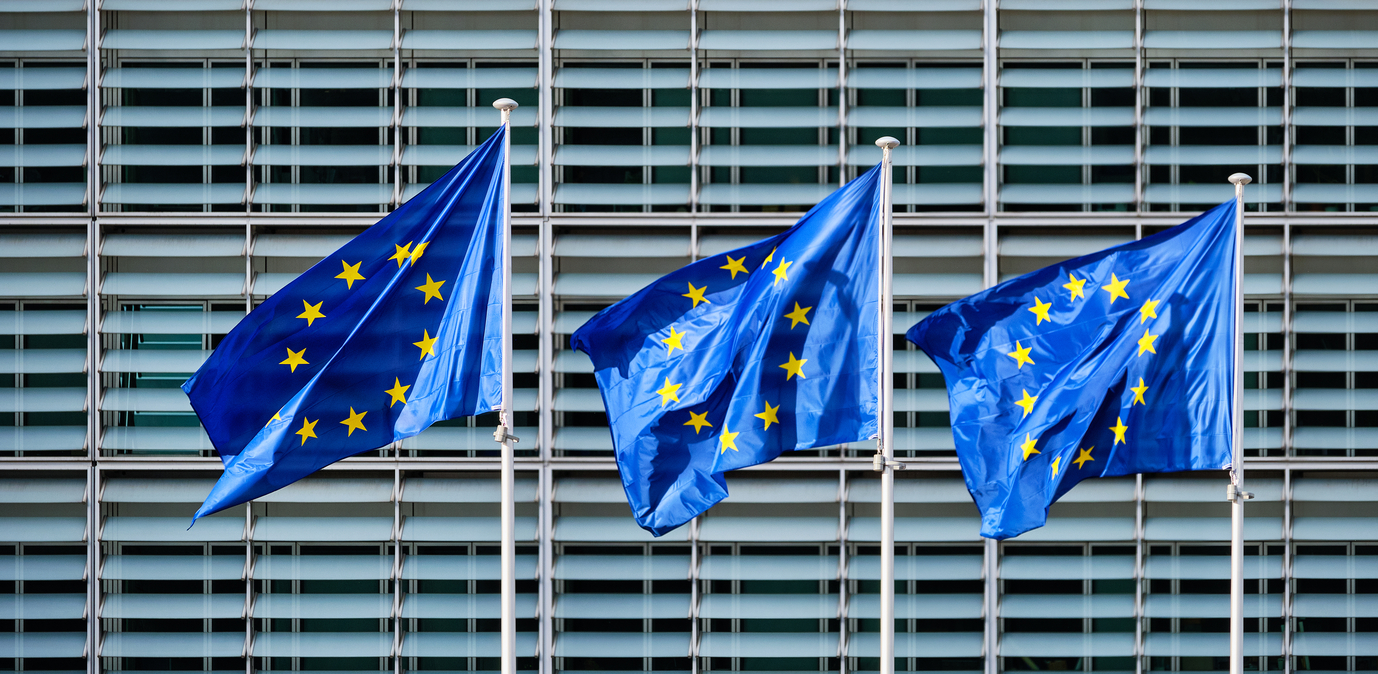
An evergreen priority for the European Commission, competition policy has shifted into the active stages of policymaking. It is at the top of many agendas, and the globally interconnected tech sector is increasingly a priority in competition regulation. Here are five aspects of competition reform to watch right now.
1. Priorities of a new European Commission...

Preventing illegal hate speech online is a priority for policymakers worldwide, and the need to do so is increasingly evident. How can governments strike the right balance between tackling the mechanisms and incentives behind the proliferation of illegal hateful content online, while also ensuring that platforms do not enable censorship? A closer look at present and future debates demonstrates the intricacies of keeping an ever-growing number of internet users safe and preserving their fundamental rights.

Even with the UK’s digital marketing sector still grappling with the aftershocks of GDPR implementation in 2018, further regulation has been brewing over recent months. The UK Government undertook a consultation on online advertising earlier this year, which it is expected to respond to imminently with new policies in mind. Indeed, it seems if not 2020, then 2021 might be the next watershed moment for the industry. Drawing from recent developments over this summer - including the latest proposals of the Competition and Markets Authority, and the evaluation of the current framework in a DCMS-commissioned study – this blog post will map out what this new wave of regulation might look like.

The Internet of Things (IoT) promises to transform societies and economies. Such widespread transformation is bound to attract increased regulatory and legislative scrutiny. Here we explore the issues on which governments are most likely to focus their attention.

As we explained in our previous blog, European policy makers are pondering whether to revise the 1985 Product Liability Directive to make it ‘future-proof’ and ensure it remains fit for purpose amidst the growth of new technologies. Both the European Commission and European Parliament have addressed the issue in various formats and within different frameworks, both as part of a broader revision of European product safety regulation and/or as part of a planned regulation on Artificial Intelligence – whose aim would be to address the legal challenges of new automated technologies.

The continued growth and application of new technologies raises new challenges for regulators and policymakers. Alongside new policy frameworks, existing regulations need to be re-evaluated to ensure that they remain proportionate, effective, fit-for-purpose and ‘future proof’. One such regulation is the Product Liability Directive, with growing calls for it to be reviewed.

The development and roll-out of the fifth-generation mobile communications system (5G) in Europe raises a number of issues for regulators, including costs and security concerns. We explain the measures the European Commission is putting forward to provide a regulatory framework for 5G to address these issues.

The Government responded earlier this month to the Digital, Culture, Media and Sport (DCMS) Select Committee’s recommendations on ‘immersive and addictive technologies’. While it establishes a commitment to proportionate and enabling regulations for the virtual (VR) and augmented reality (AR) industry, both the Committee and the Government miss a trick by failing to see beyond initial gaming applications. Greater understanding of the broad scope that the technology potentially offers will be critical if the UK is to sustain its status as a leader in the space.